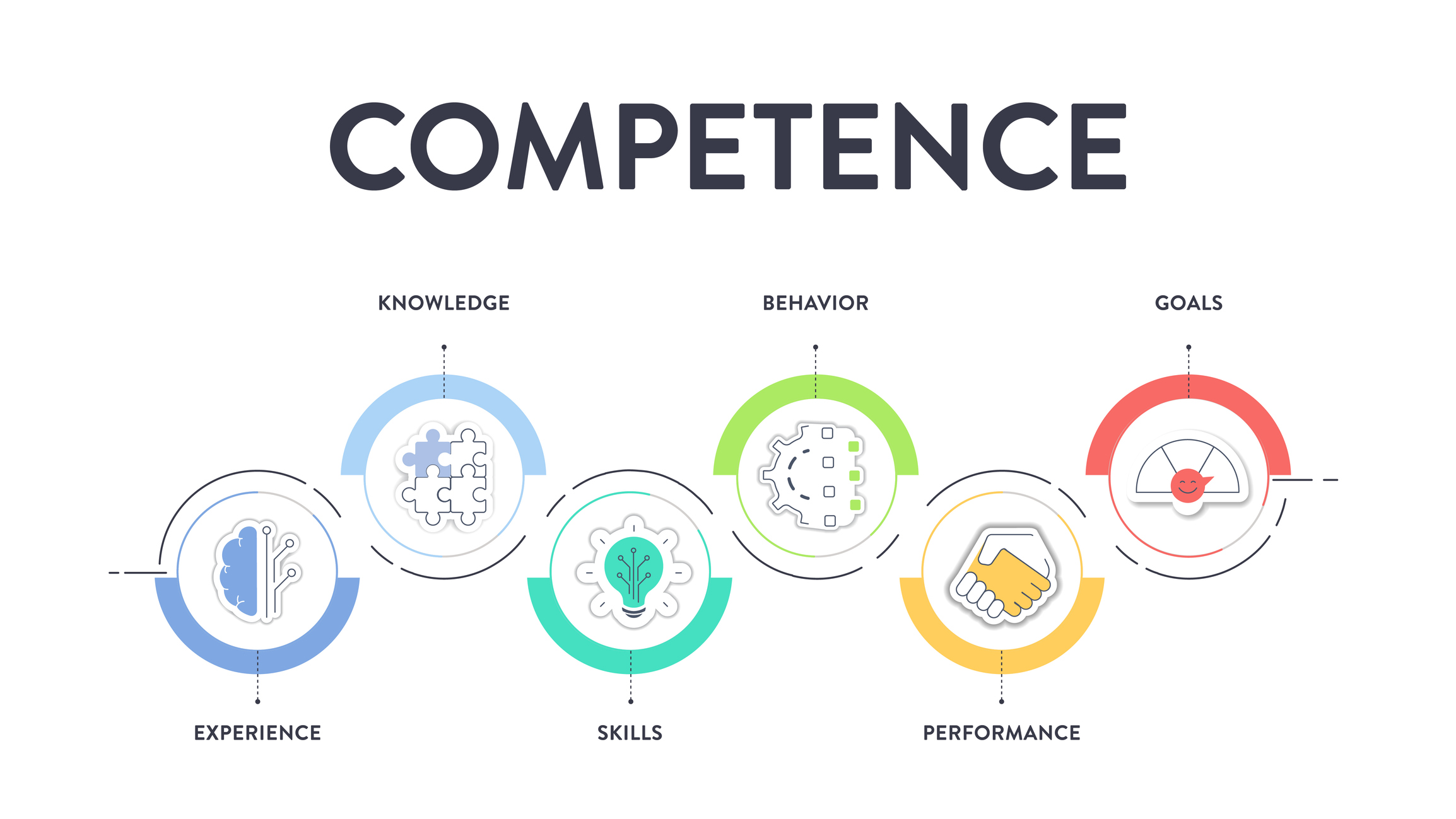
If you’re serious about building a high-performing sales team, one of the smartest things you can do is create a clear, customised competency framework. It’s not a buzzword — it’s your blueprint for success. Without one, your development strategy is likely to fall flat or feel disconnected from what really drives performance.
We saw this first-hand with a mid-sized engineering company we worked with. They were struggling with inconsistent account management and client churn. By introducing a tailored competency framework for their sales and account teams, they created a clear picture of what “good” looked like — and built training, coaching, and hiring decisions around it. Within a year, they’d increased client retention by 22%. The change wasn’t complex — it was just targeted.
Here’s how you can do the same.
What is a competency framework?
At its core, it’s a simple, structured way of defining the skills, behaviours, and knowledge your salespeople need to succeed in your business — not just in theory, but in your real-world context. Think of it as a roadmap that sets expectations, identifies gaps, and helps everyone grow in the right direction.
Why ‘off-the-shelf’ doesn’t cut it
Plenty of businesses grab generic lists of sales competencies and hope they’ll do the job. But these rarely reflect the specific values, sales cycle, customer needs, and product complexity that make your business unique. For example:
- A B2B tech company will need different selling skills than a fast-moving consumer goods business.
- Consultative selling requires deeper listening, questioning, and trust-building than high-volume transactional selling.
- Some teams might need to be stronger in digital tools, while others might rely more on face-to-face influence.
One size doesn’t fit all — and when you use a framework that doesn’t fit, your training and coaching miss the mark.
How it helps you build a strategy that works
A customised competency framework gives you a solid foundation to:
- Assess current skills – Identify the gaps between where your team is now and where you want them to be.
- Target development – Focus your training, coaching, and resources on what actually moves the dial.
- Track progress – Create a clear path for growth and measure improvement over time.
- Recruit better – Hire people based on what you need, not what generic job ads suggest.
The key is to make it specific to your sales process, your culture, and your clients. That’s what helped our client see such a dramatic improvement — their framework wasn’t just a list, it was a live tool embedded in 1:1s, reviews, training, and hiring.
How to get started
- Define what good looks like – Work with sales leaders and top performers to identify key behaviours and skills at each level.
- Map it to your sales process – Make sure the framework reflects the stages and challenges of your unique sales cycle.
- Make it practical – Use real examples, simple language, and behavioural indicators so everyone can relate to it.
- Use it often – Embed it into 1:1s, reviews, coaching sessions, hiring interviews, and training design.
Final thought
A good competency framework isn’t a tick-box exercise. Done right, it becomes the engine room of your sales development strategy — a tool your managers and teams can rely on every day. It gives you focus, saves time, and drives results.
Need help building a framework that works for your sales team?
That’s exactly what we do. Get in touch to explore how we support capability development at BLT.