What It Really Takes to Become a Trusted Advisor in Complex Sales

How salespeople move from explaining products to designing the right solution

Customers want salespeople who can act as trusted advisors – experts who can listen to their needs, understand what value looks and feels like to them and then offer the right combination of solutions. But when you look at what’s actually happening in most sales conversations, there’s a significant gap.

The Reality of Complex Sales

In the engineering and technical businesses we work with, our clients aren’t selling one product. They’re often dealing with a portfolio of 20, 30, sometimes 50+ solutions. Most salespeople in these environments are exceptionally well informed; they understand the technical detail and can expertly explain what each solution does. But that’s not the same as knowing what to recommend. And that’s where the sales conversation can go off course.

When tasked with selling a wide range of solutions, most salespeople fall into one of a few patterns:

  • They talk through too many options
  • They jump to a solution too quickly
  • Or they stay too high-level and avoid committing

Customers Don’t Want Options. They Want Direction.

Customers aren’t looking for a list of everything you can do. They expect you to help them decide. And the more complex your portfolio, the more important that becomes. If you walk in with 50 possible solutions and walk out without a clear recommendation, you haven’t added much value. You’ve just passed the complexity back to them.

The Shift: From Seller to Solution Architect

The best salespeople do something different. They design solutions and bring structure to something that could easily feel messy. They think more like architects.

They make trade-offs. They prioritise what matters. They test ideas. They sense-check priorities. They make recommendations. And crucially, they build the answer together. Because in complex environments, the right solution isn’t just designed for the customer. It’s developed with them.

What “Trusted Advisor” Actually Means

This is where the idea of a trusted advisor becomes real. It’s not about knowing the most, explaining everything or just presenting options.

It’s about helping the customer make a decision they feel confident in.

That means:

  • Asking better questions before suggesting anything
  • Understanding what matters commercially, not just technically
  • Being prepared to challenge or educate when needed
  • Narrowing the options rather than expanding them
  • Working with the customer to shape the right solution
  • Taking a clear position and standing behind it

That point about educating matters. Customers don’t always know what “good” looks like. A trusted advisor helps to bring clarity; they guide, they reframe, they help the customer think differently. And they do it in a way that feels collaborative, not pushy. That’s what builds real trust.

Where We Help

This is exactly the challenge we work on with teams at Business Linked Teams. We don’t focus on adding more product knowledge. Most teams already have plenty. We focus on what sits on top of that.

  • How to structure conversations so the right information comes out
  • How to diagnose properly before jumping to solutions
  • How to narrow down options with confidence
  • How to link technical capability to commercial value
  • How to recommend in a way that builds trust, not risk

Because in complex sales, the value isn’t in what you know. It’s in what you do with it.

A Final Thought

If your sales team is working with a broad range of solutions, the question isn’t whether they understand them. It’s whether they can turn that understanding into a clear, confident recommendation. That’s the difference between someone who explains what’s possible…and someone a customer trusts to decide what’s right.



Technical Strength Is Only Half the Sales Story: Engineers know the product. Selling it is a different skill

Spend five minutes in most manufacturing or engineering businesses and you’ll see the same pattern. The people selling are often engineers. On paper, it makes total sense. The products are complex, the solutions are technical and the customers expect credibility. But it also creates a challenge that most organisations don’t really deal with.

Let’s start with the stand-out qualities that engineers bring to sales:

  • Proper technical credibility
  • The ability to answer detailed questions without hesitation
  • A genuine belief in the product
  • Strong problem-solving instincts
  • The ability to build trust quickly

What this means is that engineer-sales people are excellent at explaining the product, walking through the features and showing how it works. But the reality is that not all B2B buyers think like engineers. Research from Gartner reveals that the average buying group includes 6-10 people which means salespeople aren’t just dealing one type of buyer, they’re dealing with multiple different perspectives, priorities and concerns.

For example:

  • Someone senior who’s focused on the bigger picture
  • Someone technical who wants the detail
  • Someone commercial who cares about cost and risk
  • Someone operational who’s thinking about delivery

The Gap

The issue isn’t that engineers can’t sell. They absolutely can. It’s that they’ve rarely been taught how to adapt theirs sales messaging to suit different audiences. What we see all the time is:

  • Too much detail, too early
  • A focus on what it is instead of why it matters
  • Conversations that stay technical, even when the buyer isn’t
  • Missed signals from people who are less comfortable with detail
  • Hesitation when the discussion moves away from the product

In short, the sales approach stays fixed. The buyer doesn’t. And that’s where deals start to drift or stall.

What Better Looks Like

The best technical salespeople don’t stop being engineers. They build on it. Specifically, they learn how to:

  • Start with the problem, not the product
  • Translate technical detail into commercial value
  • Adjust how they communicate depending on who they’re speaking to
  • Ask better questions before jumping into solutions
  • Handle different stakeholders without losing momentum

It’s not about being less technical. It’s about being more flexible.

Where We Help

This is exactly where we work with manufacturing and engineering businesses at Business Linked Teams. We don’t try to turn engineers into traditional salespeople. It doesn’t work. Instead, we help them keep what makes them strong and add what’s missing.

That usually means:

  • A clearer structure for sales conversations
  • More confidence outside of purely technical discussions
  • Better questioning and listening
  • The ability to flex their style depending on the buyer
  • A stronger link between what they know and what the customer actually cares about

The goal isn’t to change who they are. It’s to help them sell in a way that matches how buyers actually buy.

A Final Thought

If your sales team is made up of engineers, you’re already in a strong position. You’ve got people who understand your product properly.But understanding the product isn’t the same as influencing a decision. If you’re not helping them bridge that gap, there’s a cost. And it’s usually bigger than people think.


Sales Training Hasn’t Caught Up with AI — Yet

Most sales training still ignores AI. Here’s why that’s risky, and what forward-thinking teams are doing differently.

AI is already reshaping how sales teams research prospects, write outreach messages, prepare proposals, and manage accounts. Yet many sales training providers are still pretending it’s a passing trend. They teach the same techniques they’ve taught for years — with no mention of how sales professionals can use tools like ChatGPT or Copilot to speed up preparation, sharpen insight, and tailor communication.

That’s a problem.

The Growing Gap in Sales Capability

Within every sales organisation, there’s now a widening divide.
Some salespeople are experimenting with AI, learning how to use it to write better emails, analyse customer data, or summarise meetings. Others are avoiding it altogether — unsure, sceptical, or simply too busy to learn.

The result? A patchwork of skills, inconsistent performance, and little control over how AI tools are used (or misused). One salesperson might generate strong, targeted proposals in minutes, while another is still writing from scratch. Some might copy AI outputs without checking accuracy or tone, risking credibility with clients.

Why Integration Matters

AI isn’t replacing the salesperson — it’s amplifying them. But to do that safely and effectively, people need to be trained not just in sales, but in how to use AI intelligently throughout the sales process.

When AI is woven into sales training:

  • Salespeople learn where AI adds value — and where human judgement still matters most.
  • Teams develop consistent standards for accuracy, ethics, and tone.
  • Managers gain visibility and control over how tools are being used.
  • Organisations create a shared playbook that keeps productivity and professionalism aligned.

Without this integration, AI adoption becomes ad hoc, uneven, and potentially risky.

What Effective AI-Integrated Sales Training Looks Like

At Business Linked Teams, we’ve built AI into every stage of our sales training programmes — supported by our own AI Playbook for Sales Professionals. We don’t just talk about AI; we use it.

Our sessions are practical, fast-paced, and focused on real outcomes. Salespeople learn how to:

  • Research companies and markets in minutes, not hours.
  • Identify buying signals and high-potential prospects.
  • Personalise outreach messages without losing authenticity.
  • Turn meeting notes into actionable follow-ups.
  • Design proposals that are clear, compelling, and measurable.
  • Use AI responsibly — checking for accuracy, bias, and ethics.

Each stage includes hands-on activities where participants practise using AI tools safely and effectively. The emphasis is always on human skill, guided by AI support.

The Future Belongs to AI-Enabled Sales Teams

In the coming year, the gap between AI-enabled and AI-averse sales teams will only widen. The difference won’t just show up in productivity — it will show up in pipeline quality, customer experience, and long-term revenue.

Sales training that ignores AI is already outdated.
Sales training that embraces it builds capability, confidence, and control.

If you want your sales team to stay ahead — not just in skill, but in mindset — it’s time to make AI part of your learning strategy.


Why It’s Time to Rethink How You Train Your Sales Team

Sales teams using AI are seeing real results:

  • A McKinsey report found that companies using AI in sales see a 13–15% lift in revenue and a 10–20% increase in ROI.
  • Gartner predicts that by 2027, 95% of seller research will begin with AI.
  • A recent study shows sales teams using AI tools experience 20–40% gains in productivity.

So why aren’t more companies training their people to use it?

What this means in practice

Most organisations are now investing in sales technology—AI-powered CRMs, chatbots, lead scoring tools—but training hasn’t kept pace. Many salespeople are either unaware of what the tools can do or are unsure how to use them in a way that adds real value.

That’s the gap: tools are improving, but behaviours aren’t changing fast enough. Sales training is still focused on models and messaging from a pre-AI world.

How to incorporate AI into your sales training

Here’s how you can start closing that gap and bringing your training up to speed:

1. Make AI part of onboarding

Introduce new starters to the AI tools they’ll be expected to use. Go beyond showing where the buttons are—give them time to explore use cases in your sales context.

Example: Walk through how an AI tool can summarise a LinkedIn profile or generate a personalised outreach message. Let reps practice editing AI outputs to fit your tone and values.

2. Use real sales examples in training

Incorporate prompts, screenshots, or outputs from your AI tools into existing sales training. Don’t treat AI as an “extra”—weave it into how you teach objection handling, customer research, and call planning.

3. Coach managers to reinforce good use

Managers need to model and coach around AI use. That might mean reviewing an AI-drafted email together or discussing the insights from a Gong call report as part of 1:1s.

4. Update your sales playbook

If your playbook doesn’t reflect the AI tools your team is expected to use, it’s out of date. Include tips, prompts, and examples for using AI effectively (and ethically) in key sales activities.

What the benefits look like

  • Better preparation: Sales people spend less time researching and more time selling.
  • More personalisation: Outreach that feels relevant and human, not templated.
  • Faster ramp-up: New hires get up to speed quicker because they’re not starting from scratch.
  • Higher confidence: Reps feel supported by the tech, not overwhelmed by it.

The real win is this: when salespeople understand how to use AI, it doesn’t feel like a shortcut—it feels like smart selling.

Local Language, Global Impact: Why Localising Leadership Training Matters

When global organisations invest in leadership development, there’s often a push to standardise—one programme, one set of materials, one common language. That makes sense. You want consistency, alignment, and a shared leadership culture. For most multinationals, that means delivering programmes in English.

But while English might be the corporate language, true leadership development happens at a local level—and that’s where many programmes fall short.

At Business Linked Teams, we believe the strongest leadership programmes are designed globally and delivered locally—in both language and context. Here’s why that matters.

Why a global leadership framework is essential

There’s real value in having a consistent, global approach to leadership development:

  • Everyone learns the same core concepts and behaviours
  • It supports cross-border collaboration and mobility
  • It reinforces company values and culture
  • It creates shared language and expectations across the organisation

A global framework provides clarity and cohesion—but on its own, it’s not enough to change behaviour.

Why localisation makes it stick

For leadership training to have real impact, it needs to feel relevant, resonant, and respectful. That’s where localisation—in language, cultural references, and delivery style—makes all the difference.

Here’s what we’ve seen:

  • Local language creates psychological safety. People open up more, ask better questions, and engage more deeply when training is delivered in their native language—not just because they understand better, but because it feels like the training is for them, not just rolled out to them.
  • Cultural context matters. A case study that lands well in the UK may fall flat in Japan. A leadership behaviour that’s expected in Germany might seem too direct in Brazil. Trainers who speak the local language and understand the cultural nuance bring the content to life in ways that generic, centralised delivery can’t.
  • Buy-in is stronger. When people feel seen, understood, and spoken to in a way that reflects their reality, they’re far more likely to commit to change—and carry it back to their teams.

A balanced approach: Global standards, local relevance

The most effective global leadership programmes strike a balance:

  • Designed around a global framework (often in English)
  • Delivered in local languages by trainers who understand the regional context
  • Flexible enough to adapt case studies, delivery style, and examples
  • Consistent in outcomes, tailored in experience

This is exactly how we work. At Business Linked Teams, we deliver leadership programmes in 23 languages—combining global structure with local relevance to drive lasting change.

Final thought

If your leadership programme is global in scope but feels foreign to your local teams, you’re not getting the full return on your investment. A one-size-fits-all approach may be efficient—but it’s rarely effective.

To truly develop leaders across your organisation, you need a model that respects both the power of global alignment and the impact of local delivery.

Need help rolling out leadership programmes across multiple countries and languages?
We work with global businesses to deliver consistent, locally relevant leadership development in 23 languages.

The Missing Middle: Why Your Managers of Managers Need More Than Just Another Training Course

Most organisations have leadership development programmes in place — but often, they focus on either end of the leadership ladder.

On one side, there’s training for new managers and team leaders: how to hold 1:1s, give feedback, manage time. On the other, there are executive development schemes for senior leaders. But in between, there’s a critical group that’s often overlooked: middle managers who manage other managers.

This group plays a huge role in driving performance, culture, and strategy — yet they’re often left to figure it out for themselves. They’ve usually had training before, they’re competent in their functional roles, and they’re seen as “solid performers.” But the truth is, many of them are stuck in operational survival mode. They’re managing up, down, and sideways, often without the mindset or tools to lead in a truly agile, forward-looking way.

What this group actually needs

This group doesn’t need more generic leadership training. They’ve seen it all before. What they need is a transformational learning experience — one that shifts mindset, stretches behaviour, and helps them step into the role of cultural leader and strategic enabler.

They’re managing complexity, competing priorities, change fatigue, and increasingly hybrid teams. They’re also the link between strategy and delivery. If you want your organisation to adapt, grow, or change direction, this is the group that makes it happen.

And yet — they’re often under-supported, under-coached, and under-developed.

What effective middle manager development looks like

To genuinely lift performance and impact at this level, leadership programmes must go beyond content delivery. The goal isn’t just to “teach” — it’s to transform. That means helping managers of managers:

  • Shift from doing to enabling
  • Become confident coaching leaders
  • Navigate ambiguity and lead with agility
  • Role model values and influence culture across boundaries
  • Build strong cross-functional connections
  • Think beyond their function to what’s right for the business

Checklist: What a high-impact programme should include

  • A clear focus on mindset and behaviour change, not just new knowledge
  • An extended learning journey — not a one-off event
  • Real-life, work-based challenges to apply learning in context
  • Opportunities for feedback, coaching, and reflection
  • Peer learning and cross-functional networking to break silos
  • Tools for coaching, influencing, and managing complexity
  • Support for leading culture, not just managing tasks
  • Action planning that aligns with organisational goals

Final thought

Middle managers are the engine room of your business. If you want change to stick, culture to evolve, or strategy to land — they’re the ones who deliver it. But they can’t do that if they’re only equipped with yesterday’s tools.

Don’t leave this layer behind. Invest in them properly — and you’ll see the difference ripple through your entire organisation.

Want to know what a transformational leadership programme looks like in practice?
We design and deliver development journeys tailored to the needs of managers of managers — focused on real-world impact, not just more content. Talk to us about how we can help.

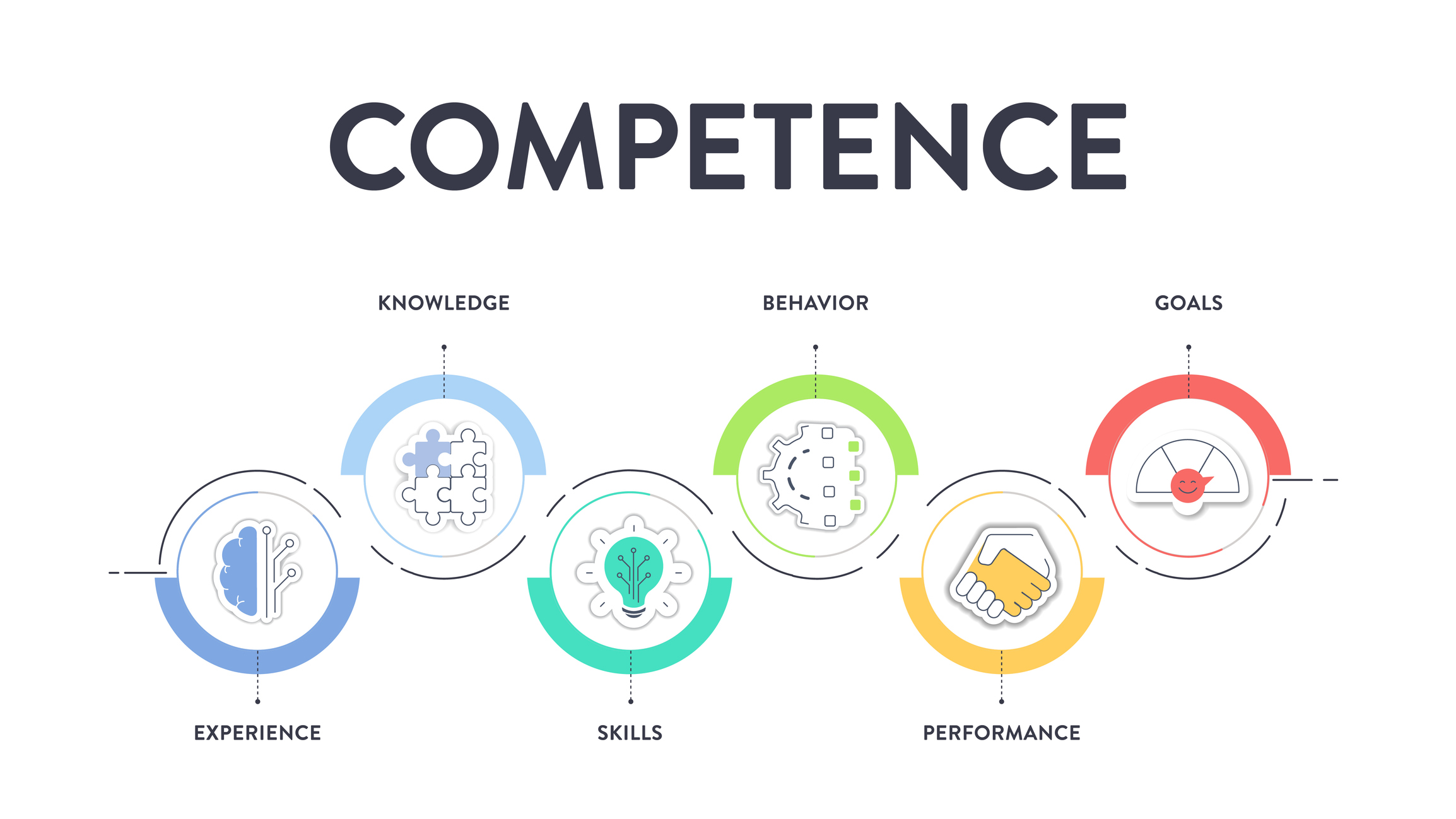
How a Custom Sales Competency Framework Boosted Client Retention by 22% — and How You Can Do the Same

If you’re serious about building a high-performing sales team, one of the smartest things you can do is create a clear, customised competency framework. It’s not a buzzword — it’s your blueprint for success. Without one, your development strategy is likely to fall flat or feel disconnected from what really drives performance.

We saw this first-hand with a mid-sized engineering company we worked with. They were struggling with inconsistent account management and client churn. By introducing a tailored competency framework for their sales and account teams, they created a clear picture of what “good” looked like — and built training, coaching, and hiring decisions around it. Within a year, they’d increased client retention by 22%. The change wasn’t complex — it was just targeted.

Here’s how you can do the same.

What is a competency framework?

At its core, it’s a simple, structured way of defining the skills, behaviours, and knowledge your salespeople need to succeed in your business — not just in theory, but in your real-world context. Think of it as a roadmap that sets expectations, identifies gaps, and helps everyone grow in the right direction.

Why ‘off-the-shelf’ doesn’t cut it

Plenty of businesses grab generic lists of sales competencies and hope they’ll do the job. But these rarely reflect the specific values, sales cycle, customer needs, and product complexity that make your business unique. For example:

  • A B2B tech company will need different selling skills than a fast-moving consumer goods business.
  • Consultative selling requires deeper listening, questioning, and trust-building than high-volume transactional selling.
  • Some teams might need to be stronger in digital tools, while others might rely more on face-to-face influence.

One size doesn’t fit all — and when you use a framework that doesn’t fit, your training and coaching miss the mark.

How it helps you build a strategy that works

A customised competency framework gives you a solid foundation to:

  • Assess current skills – Identify the gaps between where your team is now and where you want them to be.
  • Target development – Focus your training, coaching, and resources on what actually moves the dial.
  • Track progress – Create a clear path for growth and measure improvement over time.
  • Recruit better – Hire people based on what you need, not what generic job ads suggest.

The key is to make it specific to your sales process, your culture, and your clients. That’s what helped our client see such a dramatic improvement — their framework wasn’t just a list, it was a live tool embedded in 1:1s, reviews, training, and hiring.

How to get started

  1. Define what good looks like – Work with sales leaders and top performers to identify key behaviours and skills at each level.
  2. Map it to your sales process – Make sure the framework reflects the stages and challenges of your unique sales cycle.
  3. Make it practical – Use real examples, simple language, and behavioural indicators so everyone can relate to it.
  4. Use it often – Embed it into 1:1s, reviews, coaching sessions, hiring interviews, and training design.

Final thought

A good competency framework isn’t a tick-box exercise. Done right, it becomes the engine room of your sales development strategy — a tool your managers and teams can rely on every day. It gives you focus, saves time, and drives results.

Need help building a framework that works for your sales team?
That’s exactly what we do. Get in touch to explore how we support capability development at BLT.

Training is a Skill, Not a Script: Why Great Trainers Are Made, Not Born

In many organisations, the ability to train others is often assumed to be a natural by-product of subject matter expertise. If you know your stuff, surely you can teach it—right?

Not quite.

Too often, training is reduced to a passive exercise in reading from slides. But this approach fails to engage, inspire, or create lasting impact. The reality is that training is a professional skill in its own right—one that requires deliberate development, practice, and investment.

1. Expertise Doesn’t Equal Instructional Ability

Being knowledgeable is not the same as being able to teach. Effective trainers understand how adults learn, how to adapt their delivery to different learning styles, and how to create a psychologically safe space where people feel confident to participate. These are not innate abilities—they are learned competencies.

2. Engagement Doesn’t Happen by Accident

Reading from a slide deck is not training—it’s presenting. True training is interactive, dynamic, and responsive. It involves asking powerful questions, facilitating discussion, using real-world examples, and designing activities that reinforce learning. These techniques require skill, not just confidence.

3. Real Learning Requires Real Design

The goal of training isn’t just to inform—it’s to transform. That means helping people apply what they’ve learned in meaningful ways. Skilled trainers use methods like scenario-based learning, spaced repetition, and post-session reinforcement to ensure knowledge sticks. These approaches require thoughtful planning and instructional design expertise.

4. Emotional Intelligence Is Essential

Training is as much about people as it is about content. Great trainers can read the room, respond to resistance, and adapt their approach in real time. This calls for empathy, active listening, and strong communication skills—all of which can be developed with the right support.

5. Investing in Trainers Builds Organisational Strength

When organisations invest in developing their trainers, they’re not just improving learning outcomes—they’re strengthening their culture. Skilled trainers become ambassadors of growth, helping to embed values, drive performance, and foster collaboration across teams.


Ready to Build Your Training Capability?

If you or your team are delivering training—or are about to start—it’s worth asking: have you been trained to train?

At Business Linked Teams, we offer a comprehensive Trainer Skills Programme designed to equip professionals with the tools, techniques, and confidence to deliver impactful, engaging, and effective training.

Whether you’re new to training or looking to sharpen your skills, our programme will help you move beyond the slides and into real learning.

“Ghosted by the Market?”: What Salespeople Can Do When No One’s Responding

If you’re in sales right now, you’re probably feeling it: the silence.


Emails aren’t being returned. Proposals are going unread. Decisions are being delayed—indefinitely. It’s like being ghosted by the market.

You’re not alone. Across industries, and especially in B2B environments, sales professionals are reporting the same thing: eerie quiet. Whether it’s global uncertainty, recession talk, summer slowdowns, or companies tightening spend until next year, it’s hard not to feel stuck—or worse, invisible.

So, what can you do when the usual rhythm of engagement just isn’t happening?

1. Shift from Selling to Strengthening

Right now might not be the time to push new deals over the line—but it is the perfect moment to build trust. Reach out with empathy, not urgency. Offer value, not a pitch. Be the person who shows up with insight, not pressure. Your future pipeline will thank you.

2. Work On Sales, Not Just In Sales

Use the quiet to sharpen your skills. Review past conversations. Reflect on what’s worked and where you’ve hit friction. Tweak your messaging, build case studies, polish your proposals. This is the prep season for when the tide turns.

3. Adapt and Upskill – Especially in AI

The sales landscape is changing fast—and AI is no longer optional. Whether it’s using tools to speed up research, tailor outreach, or analyse your pipeline, there’s huge value in getting comfortable with these technologies now. Investing in your own learning—whether that’s AI tools, automation, data literacy or storytelling—will help you stay one step ahead and be ready to thrive in a transformed environment.

4. Protect Your Mindset

Let’s be honest—radio silence can really mess with your confidence. Keep connected to your team. Celebrate small wins. Stick to a routine that helps you feel purposeful. Sales is emotional labour, and mindset is half the game.

5. Stay Visible

Even if your customers aren’t buying, don’t disappear. Stay active on LinkedIn. Share something valuable. Drop a note just to say hello. When they’re ready to buy again, you want to be the name they remember.

Final Thoughts

The storm will pass. The silence will lift. Decisions will start moving again. But the salespeople who will be best placed to respond when that moment comes are the ones who didn’t disappear—who stayed curious, stayed connected, and stayed ready.

Why Sales Training Must Be Fully Customised to Deliver Real Impact

In today’s competitive and constantly shifting commercial landscape, salespeople face more pressure than ever before — not just to sell, but to solve, partner, and add value.

Despite this, too many organisations still rely on generic, off-the-shelf sales training programmes that fail to reflect the real-world challenges their teams face. While these solutions may offer a quick fix or tick a compliance box, they rarely create lasting behavioural change or deliver business impact.

The truth is simple: effective sales training must be fully customised. Here’s why:

1. Your Sales Strategy is Unique – Your Training Should Be Too

Every organisation’s sales strategy is shaped by its market, customers, competitive landscape and commercial goals. What works for one business won’t work for another.

Customised training ensures your salespeople are learning the skills, behaviours and approaches that will actually help them deliver your strategy – not someone else’s.

Whether your focus is on winning larger deals, improving account penetration, or driving customer lifetime value, the training must be aligned to these outcomes from day one.

2. Sales Teams Learn Best in Context

Real learning happens when people can see the direct relevance of what they’re learning to their daily work. That means:

  • Using your sales language and customer scenarios
  • Working with your value proposition and case studies
  • Practising conversations that feel like real sales calls or account reviews

When salespeople can immediately connect the learning to their day-to-day, they’re more likely to engage, apply it, and embed it.

3. One Size Doesn’t Fit All – Even Within Your Sales Team

Sales teams are often diverse – from new joiners still learning the ropes, to experienced account managers handling strategic global clients. Their training needs will differ.

A customised approach allows you to tailor learning journeys based on role, experience, region or sector. It also creates space to develop the deeper, consultative skills that top performers need, not just the basics.

4. Manager Involvement Drives Real Change

When sales training is developed in partnership with your sales leaders and managers, it gains relevance, credibility and traction.

Custom programmes give you the opportunity to involve the leadership team in shaping the content, reinforcing the learning, and coaching teams on the ground. This turns learning into a strategic business initiative – not just a one-off event.

5. The Sales Landscape is Changing Fast – Training Needs to Keep Up

From hybrid selling and digital buyer journeys to value-based selling and AI-assisted prospecting – the skills needed for success are evolving rapidly.

Customised training can adapt to these changes in real time. It allows you to build learning around the challenges and tools your teams are facing right now, rather than relying on outdated content.

Final Thoughts

In high-performing sales organisations, training isn’t a standalone event – it’s a core part of business capability. But for it to truly drive performance, it must be built around your people, your customers, and your goals.

At Business Linked Teams, we don’t believe in off-the-shelf. We work in close partnership with our clients to co-create programmes that not only reflect your sales strategy, but actively help to deliver it.

Because when training is truly customised, the results speak for themselves.